
I was having a lot of difficulty with the employer–there was a lot of discrimination against me, so I stood up in front of the employer, and they fired me. I was out of work for a year. But the union kept fighting for me from the beginning to the end, and they got my job back, with the pay that I lost. I am very grateful to [my business agent] and the staff at the union, because they're not afraid to fight. They will stand up for anyone and everyone, and they fight to win.
Organize your workplace
You don't have to wait for permission to be treated fairly at work.
You've been told to wait for a raise, to stay quiet about safety and to be grateful for the schedule you got. You don't have to. Federal law protects your right to organize — and 8,000+ workers across New England and New York have already done it with us.
- A union is your coworkers, organized together, with the legal power to bargain a contract.
- When we stand together, we win things no worker can win alone: a contract, a voice, a seat at the table.
- You'd be united with 8,000+ NEJB members who already chose each other.
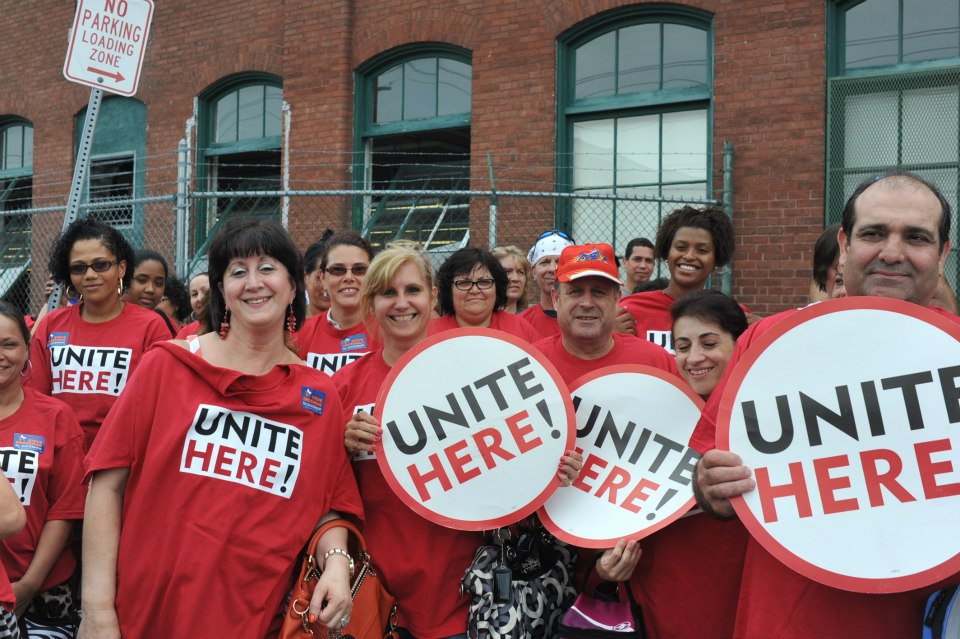 UNITE HERE RALLY
How it works
Organizing is not magic. It's four steps.
Every contract NEJB has ever won started with a worker who picked up the phone. Here's the path from that first call to a signed contract.
- Step 01
Reach out
Fill out the form below or call. An NEJB organizer will get back to you within 48 hours. No paperwork. Just a conversation with someone who has been through this before.
- Step 02
Talk to your coworkers
Quietly. We'll help you figure out who you trust, what to say, and how to listen. Organizing is conversations — at first only between you and a few people.
- Step 03
Sign cards together
When a majority of your coworkers are with you, you sign union authorization cards. This is what triggers a union election — or even voluntary recognition.
- Step 04
Win your contract
After the vote, a bargaining committee of your coworkers negotiates wages, benefits, working conditions, and respect — and you ratify the contract. Now it's all in writing.
Recent wins
Here's what collective bargaining delivers.
2018
900+
MGM Springfield
Gaming workers organized through card-check neutrality.
2019
19%
First contract
Average wage increase + pension secured for ~700 hospitality workers.
2021
1st
Pavement Coffee
First Massachusetts coffee shop to unionize. Contract ratified in 2022.
2025
97%
Blank Street
Workers at 7 Boston locations voted yes by a 97% margin.
Before you reach out
Yes, it's safe. Here's why.
Federal law protects you
It is illegal for your employer to retaliate against you for talking to a union. We have been protecting workers through this process for over a hundred years.
Your boss is not in this loop
Your name, your workplace, and anything else you tell us stays between you and your organizer. We never give your details to your employer — full stop.
Take it at your pace
A conversation is just a conversation. Most workers talk to us for weeks — sometimes months — before anything else happens. You decide what the next step is.
Common CONCERNS
What's stopping you?
We've heard every hesitation. Here's what we tell workers in their first conversation with us — straight, no spin.
"I'll get fired for organizing"
Federal law (the National Labor Relations Act) makes it illegal for your employer to fire, discipline, threaten or retaliate against you for talking to a union or organizing your coworkers. We have a century of experience protecting workers through this process. The fear is real - but the risk of doing nothing is higher.
"Unions just take your dues."
Dues aren't a fee. They're what you pay to have a contract, a lawyer, and thousands of coworkers standing behind you when you need them. Ask a different question: what does not having a contract cost you? Every raise you didn't get. Every schedule change you couldn't push back on. Every time you were disciplined and had no one in the room with you. At Pavement Coffeehouse, workers negotiated benefits and protections they'd never have gotten on their own. That's the return. Dues are the investment.
"It won't actually change anything."
On your own, you're right — asking nicely usually doesn't change much. That's not because you're asking wrong. It's because one person has very little leverage. A union changes the math. Once you and your coworkers vote to organize, your employer is legally required to sit down and negotiate with you. Not listen and nod. Negotiate. Wages, schedules, safety, discipline — all of it goes into a written contract that management has to follow.
"The union is an outside third party."
The union is you. Nobody comes in from the outside and takes over. You and your coworkers decide to organize. You vote. You elect your own leaders from your own workplace. You sit at the bargaining table and decide what goes into your contract. What NEJB brings is what you can't build alone: legal expertise, organizers who've done this hundreds of times, and 8,000+ other workers across New England and New York who have your back. Your employer would like you to think the union is a stranger. It's not. It's the people you already work next to every day.
"We're like a family here. We don't need a union."
Maybe it does feel like family — a lot of workplaces do, right up until they don't. Families don't cut your hours without notice. Families don't skip your raise three years running. Families don't discipline you for speaking up. If the people you work for really mean what they say, a contract shouldn't be a problem. It just puts their promises in writing and makes them enforceable, no matter who's managing next year. A union doesn't replace the relationships you have at work. It protects them when things get hard.
"Unions are outdated."
The workers organizing right now would disagree. These aren't factory floors from a history book — they're coffee counters, hotel kitchens, warehouses, and human services agencies, and they're organizing because the problems haven't gone away. Low pay, unpredictable hours, and no say in how you're treated aren't outdated. Neither is the fix.
When you're ready
A hundred fights have started exactly this way — with one worker reaching out.
Tell us where you work and how you'd like us to get in touch. Someone from NEJB who organizes in your industry will follow up. We'll listen first. Then we'll figure out what's possible together.
- Without a union, your boss sets the rules. With one, you negotiate as equals.
- Management is legally required to come to the table.
- 8,000+ workers across NEJB stand behind every fight.
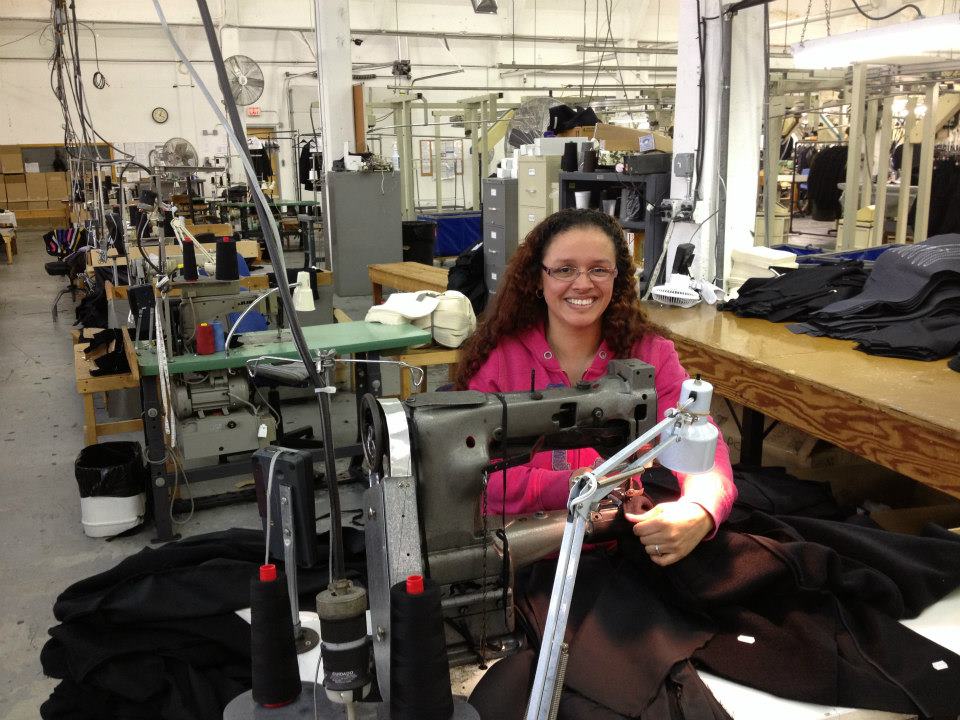 LOCAL 281 · NEW BEDFORD
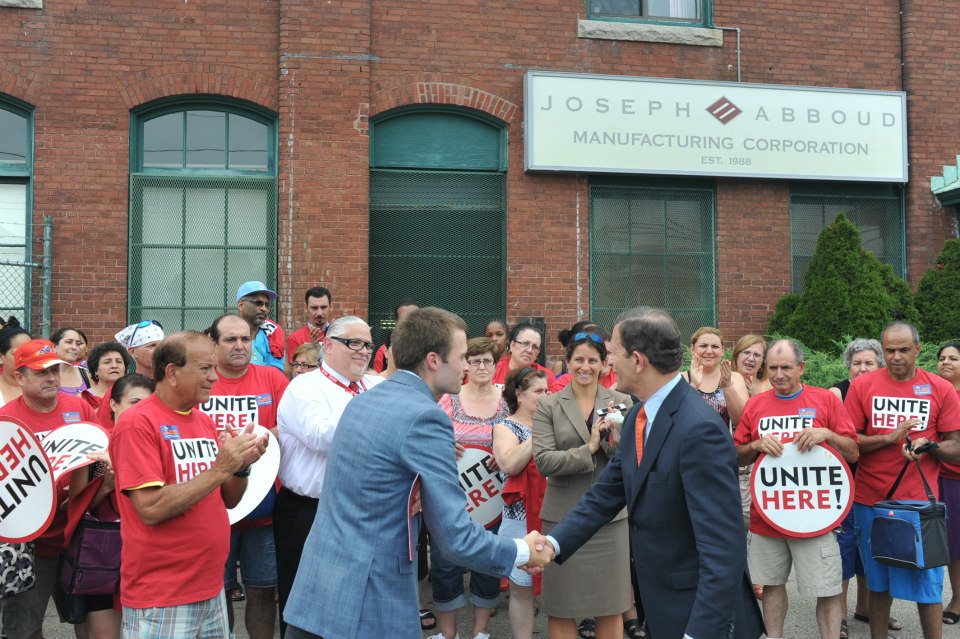 WALK-OUT · 2024
Rather not type all this out?
A real organizer answers — not a phone tree.
Thank you! Your submission has been received!
Oops! Something went wrong while submitting the form.
Workers who did it
You'd be in good company.
Some associates, the supervisors really don't like. I don't know why. They give out warnings all the time, so I do my investigations, and when I find out what really happened, I can show [management]. For one associate, I counted eight warnings in the last year. I filed a grievance every time, and six of those warnings have been retracted.
Some people are die-hards–they hate the union. They tell us they'll never change their minds, to stop asking them to sign a card. And then I tell them about the raises, the benefits, what a contract can get them, and their eyes light up, and they say, Where do I sign up?